تطبيق ذكي لاكتشاف أمراض النباتات
Smart Plant Disease Detection App
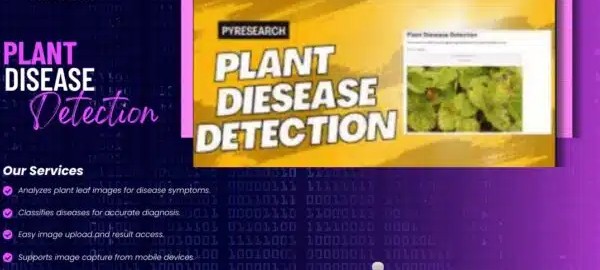
The Plant Disease Detection system uses image processing and machine learning to detect plant diseases early from leaf images. It supports precision agriculture, reduces costs, increases crop yields, and enhances global food security.
Project Overview
Plant diseases can cause major crop losses if not detected early. This AI-powered application analyzes plant leaf images using computer vision and machine learning models to accurately identify and classify diseases based on visible symptoms, enabling timely intervention and smarter crop management.
Key Features
Image Processing
- 🌿 Analyzes plant leaf images for visible disease symptoms.
- 📸 Supports images captured from cameras or mobile devices.
Machine Learning-Based Classification
- 🧠 Classifies plant diseases with high accuracy.
- 🧪 Trained on multiple disease categories for reliable diagnosis.
Real-Time Detection
- ⚡ Provides fast assessment of crop health.
- ⏱️ Enables early detection and quick decision-making.
User-Friendly & Mobile Ready
- 📲 Simple interface for image upload and result viewing.
- 📱 Compatible with mobile devices for field usage.
Disease Database Integration
- 🗂️ Accesses detailed disease information.
- 📘 Helps farmers understand symptoms and treatments.
Technology Stack
- 🐍 Programming Language: Python
- 🧠 Machine Learning Models: CNN-based classifiers
- 🎥 Image Processing: OpenCV
- 📊 Data Handling: NumPy & Pandas
- 🌐 Deployment: Web & Mobile-friendly interface
Use Cases
- 🌾 Farmers – Detect diseases early and protect crops.
- 🧑🌾 Agricultural Professionals – Improve crop management decisions.
- 🔬 Researchers – Analyze disease patterns and plant health.
- 🏢 Agricultural Organizations – Support large-scale farming operations.
Conclusion
The Smart Plant Disease Detection App empowers farmers and agricultural stakeholders with an accurate, efficient, and easy-to-use tool for early disease diagnosis. By leveraging image processing and machine learning, it promotes sustainable farming, increases productivity, reduces losses, and contributes to global food security.